Showing posts with label Alibaba. Show all posts

Friday, November 07, 2025

Peddling between China’s and US e-commerce – Sharon Gai


Sharon Gai

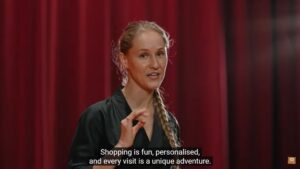
Sharon Gai, author of Ecommerce Reimagined: Retail and Ecommerce in China, started her career in Alibaba’s early days and now watches the e-commerce evolution in both China and the US. She discusses her career with Grace Shao, touching on AI, branding, and innovation.

Sharan Gai is a speaker at the China Speakers Bureau. Do you need her at your meeting or conference? Get in touch or fill in our speakers’ request form.

Are you looking for more innovation experts at the China Speakers Bureau? Do check out this list.

Monday, September 29, 2025

Key trends in Chinese B2B marketplaces – Ashley Dudarenok


Ashley Dudarenok

Marketing guru Ashley Dudarenok dives into China’s B2B marketplaces and their latest key trends, including the top-10 platforms trying to get hold of the global market, at her website Chozan. “Trust is becoming a brand asset. Alibaba’s Trade Assurance, DHgate’s escrow, and Yiwugo’s secure payments provide buyers with additional protection. Video reviews, verified supplier programs, and standardization efforts help reduce fraud while ensuring shipments clear customs smoothly,” she writes.

Ashley Dudarenok:

Cross-Border B2B Trade Growth

China’s export-led e-commerce boom is still accelerating. In 2024, cross-border e-commerce exports increased by 16.9% year-over-year, driving trade volume to 2.71 trillion yuan (approximately USD 373 billion).

This surge widened trade deficits in importing countries, fueling scrutiny of the de minimis loophole that exempts low-value shipments from tariffs. Yet demand remains strong, driven by low prices, a wide variety of products, and faster shipping times.

Innovation Across Chinese B2B Platforms

Chinese B2B platforms are evolving into tech-driven ecosystems rather than static directories. Recent upgrades include:

  • AI-driven sourcing: Alibaba, Made-in-China, and TradeChina.com now use AI to match buyers with verified suppliers, analyze intent, and forecast demand.
  • Social commerce models: Pinduoduo’s group-buying concept and Temu’s gamified shopping are adapted for bulk B2B orders, letting businesses unlock discounts through collective purchasing.
  • Payment securityEscrow and trade assurance programs, now standard, release funds only after confirmed delivery has been made. This reduces fraud and builds buyer confidence.
  • Virtual and hybrid trade shows: Global Sources and HKTDC host online exhibitions alongside physical fairs, enabling remote supplier meetings and contract negotiations.

AI, Data Analytics, and Digitalization

Artificial intelligence now extends beyond product recommendations. Platforms. TradeChina.com integrates price-tracking dashboards, while Yiwugo leverages video reviews to highlight trustworthy sellers.

Digital tools also streamline collaboration. In-app messaging, video calls, and document sharing reduce reliance on email, while digitally stored contracts and invoices simplify audits. These features make B2B trade more transparent and efficient.

Supply Chain and Logistics Transformation

Fast, predictable delivery has become a competitive edge. Platforms are investing heavily in localized logistics networks:

  • Temu builds warehouses in the US and Europe and recruits local sellers to ensure 3–7 day delivery.
  • Alibaba’s Cainiao offers end-to-end logistics with customs clearance and order consolidation.
  • DHgate simplifies small-order shipping and expands express options.
  • TradeChina.com integrates freight forwarding and customs brokerage, while Yiwugo focuses on bulk shipping solutions.

These investments reflect a clear shift: logistics is no longer just infrastructure, but a core differentiator in B2B competition.

Regulation and Trust

Stricter global regulations are reshaping digital trade. The EU Digital Services Act and the US moves to restrict duty-free imports are pushing platforms toward greater compliance. Many now enforce KYC checks, export-control screening, and real-time customs data integration.

Trust is becoming a brand asset. Alibaba’s Trade Assurance, DHgate’s escrow, and Yiwugo’s secure payments provide buyers with additional protection. Video reviews, verified supplier programs, and standardization efforts help reduce fraud while ensuring shipments clear customs smoothly.

Much more at her website Chozan.

Ashley Dudarenok is a speaker at the China Speakers’ Bureau. Do you need her at your meeting or conference? Do get in touch or fill in our speakers’ request form.

Are you looking for more marketing experts at the China Speakers Bureau? Do check out this list.

Monday, September 01, 2025

A fundamental change in consumer attitude in China – Ashley Dudarenok


Ashley Dudarenok

Internet giant Alibaba and leading university Peking University have joined forces to set up a new consumer index, the China Online Consumer Brand Index (CBI). Consumer expert Ashley Dudarenok highlights how the attitude of consumers has shifted in the world’s second economy over the past few years, as noted in Jing Daily.

Ashley Dudarenok:

For years, the playbook for winning in China was a mix of big-name endorsements, heritage storytelling, and a relentless focus on the Tier-1 coastal elite.
That playbook is now obsolete. The China Online Consumer Brand Index (CBI), a landmark study from Peking University and Alibaba, crunches the numbers on nearly one billion consumers and reveals a market that is not just evolving, but has fundamentally transformed.

The report, released August 20, isn’t just another data dump; it’s a stark look at a new consumer psyche — one that is more pragmatic, digitally native, and geographically diverse than ever before. For global brands, the findings are both a warning and a massive opportunity. Simply showing up is no longer enough.

China’s CBI, developed by Peking University’s National School of Development in partnership with Alibaba’s Taobao and Tmall Group, evaluates brands across four key dimensions: Brand Awareness (32.5%), Brand Novelty (27.5%), Customer Loyalty (22.5%), and Customer Satisfaction (17.5%). The index uniquely emphasizes Brand Novelty—reflecting China’s appetite for innovative, fast-growing brands that appeal to younger consumers…

Perhaps the most significant long-term trend identified by the CBI is the further geographic diffusion of wealth and consumer power. While the world focused on Shanghai and Beijing, cities like Hefei, Zhengzhou, Chongqing and Nanchang have quietly emerged as hotspots of high average consumption quality, sometimes even surpassing their Tier-1 counterparts.

This is not just about rising incomes. It reflects a deeper trend of “consumption upgrading” across the country. Consumers in these cities are increasingly sophisticated, demanding the same quality and brand diversity as those in the coastal megacities. For brands, this means the Tier-1 strategy is no longer sufficient.

The next wave of growth will come from understanding the nuanced cultural and economic landscapes of these rising urban centers. Brands that build logistics, marketing, and community-building strategies tailored to these new frontiers will secure the next decade of growth.

To sum up, the data is unequivocal: Chinese consumers have graduated from being passive recipients of brand messaging to active, discerning partners in value creation. The brands that understand and adapt to this new reality will not just win in China, they will define the future of global commerce.

More details in the Jing Daily.

Ashley Dudarenok is a speaker at the China Speakers Bureau. Do you need her at your meeting or conference? Do get in touch or fill in our speakers’ request form.

Are you looking for more consumer experts at the China Speakers Bureau? Do check out this list.

Monday, May 19, 2025

AI started to replace jobs in China – Ashley Dudarenok


Ashley Dudarenok

Innovation expert Ashley Dudarenok says human programmers will still be needed in her vlog. But AI is already replacing a range of jobs in China. For example, Alibaba introduced its first AI employee, Tongyi Lingma, last summer, and it made huge inroads into the work process, she notes.

Ashley Dudarenok is a speaker at the China Speakers Bureau. Would you like her at your meeting or conference? Contact us or fill out our speakers’ request form.

Are you looking for more innovation experts at the China Speakers Bureau? Do check out this list.

Monday, February 24, 2025

What does Xi Jinping’s meeting with China’s tech giants mean – Shaun Rein


Shaun Rein

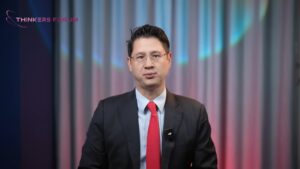
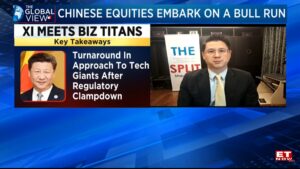
China’s President Xi Jinping met last week with the country’s major tech leaders, for the first time he did so since 2018. Business analyst Shaun Rein, author of The Split: Finding the Opportunities in China’s Economy in the New World Order, discusses the importance of this policy change after the country’s tech industry suffered from a major crackdown in the past years, he tells at the Thinkers Forum. China’s industrial leaders heard it is ok to make money again after a long time, he added

Shaun Rein is a speaker at the China Speakers Bureau. Would you like him at your meeting or conference? Contact us or fill out our speakers’ request form.

Are you looking for more innovation experts at the China Speakers Bureau? Do check out this list.
Wednesday, February 19, 2025

China is back in business in next 6,12 months – Shaun Rein


Shaun Rein (right)

According to Shanghai-based business analyst Shaun Rein in The Global View, capital is moving back to China, and the country will be back in business in six to 12 months. In the short run investors in the stock markets have to be careful, as China’s stock markets behave more like volatile retail markets where institutional investors have little influence. He adds that the tech markets will especially be booming again now Xi Jinping showed his full support for the sector.

Shaun Rein is a speaker at the China Speakers Bureau. Do you need her at your meeting or conference? Do get in touch or fill in our speakers’ request form.

Are you looking for more experts to manage your China risk? Do check out this list.

Friday, November 15, 2024

How China is leading the world in 5G and will be in 6G – Ashley Dudarenok


Ashley Dudarenok

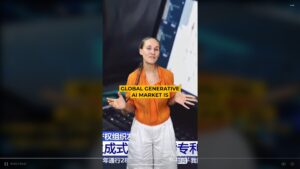
With 3.8 million 5G stations China is leading the world in 5G, explains marketing expert Ashley Dudarenok on TikTok. Alibaba already uses technology to replace workers, she adds.

Ashley Dudarenok is a speaker at the China Speakers Bureau. Would you like her at your meeting or conference? Contact us or fill out our speakers’ request form.

Are you looking for more experts on China’s innovation? Do check out this list.

Video Player
00:00
02:35

lo


Friday, September 06, 2024

Metaverse: expected to grow fast in China – Rupert Hoogewerf


Rupert Hoogewerf

The metaverse is poised to grow fast in the coming three years, says Rupert Hoogewerf, chairman and chief researcher of Hurun Report, who published a report about the industry, according to the state-owned China Daily. Technology giant Huawei tops the list with the greatest potential in the metaverse for the first time, followed by Alibaba, Baidu, China Telecom and China Mobile.

The China Daily:

China’s metaverse-related industry is expected to grow fast in the next three years, thanks to continuing maturity and the application of key technologies including 5G, artificial intelligence, blockchain, cloud computing and virtual reality, according to an industrial report.

“Whether it’s entertainment, social media, online education, telecommuting, or digital marketing, the metaverse can offer entirely new experiences and models in the years ahead,” said Rupert Hoogewerf, chairman and chief researcher of Hurun Report.

Hoogewerf made the remarks after the Hurun Research Institute released a ranking report of 200 Chinese companies with the greatest potential in the metaverse in 2024 in Nansha district of Guangzhou, the capital of Guangdong province, in late August.

“The metaverse is considered a strategic emerging industry and will accelerate the promotion of Nansha to become an innovation highland and emerging industry incubation highland in the Guangdong-Hong Kong-Macao Greater Bay Area,” said Hoogewerf.

The report refers to companies based in the Chinese mainland, Hong Kong, Macao and Taiwan. For the main list, companies considered have a value of $1 billion or more.

“There has been a clear trend of metaverse-related businesses in the past three years, especially in the fields of education, finance, tourism and healthcare,” said Hoogewerf.

Technology giant Huawei tops the list with the greatest potential in the metaverse for the first time, followed by Alibaba, Baidu, China Telecom and China Mobile.

More in the China Daily.

The full report you can read here.

Rupert Hoogewerf is a speaker at the China Speakers Bureau. Do you need him at your meeting or conference? Do get in touch or fill in our speakers’ request form.

Are you looking for more innovation experts at the China Speakers Bureau? Do check out this list. 

Sunday, August 11, 2024

How AI is changing retail – Sharon Gai


Sharon Gai

Former Alibaba executive Sharon Gai explains how AI is changing the retail industry beyond recognition. Amazon was the pioneer in this field, although now nobody can ignore the change AI is causing globally.

Sharon Gai is a speaker at the China Speakers Bureau. Do you need her at your meeting or conference? Do get in touch or fill in our speakers’ request form.

Are you looking for more experts at the digital transformations at the China Speakers Bureau? Do check out this list.

Wednesday, July 10, 2024

How China companies develop AI under US sanctions – Winston Ma


Winston Ma

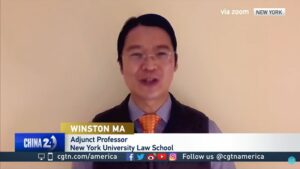
US sanctions on China make it harder for Chinese companies to develop large-scale AI systems because they lack access to finance and computing power, says Winston Ma, adjunct professor of law at the New York University School of Law. But they will focus on AI applications and their commercialization rather than developing the big systems, he tells CNBC.

Winston Ma is a speaker at the China Speakers Bureau. Do you need him at your meeting or conference? Do get in touch or fill in our speakers’ request form.

Are you looking for more experts on China’s digital transformations? Do check out this list.


Friday, June 28, 2024

How different e-commerce is in China – Sharon Gai


Sharon Gai

E-commerce expert Sharon Gai started her career at Alibaba and now explains to the rest of the world how consumer platforms in China work differently from the West, and why also newcomers like Shein and Temu work differently. A discussion on Retail TouchPoint.

Sharon Gai is a speaker at the China Speakers Bureau. Do you need her at your meeting or conference? Do get in touch or fill in our speakers’ request form.

Are you looking for more e-commerce experts at the China Speakers Bureau? Do check out this list.

Friday, April 26, 2024

What companies can learn from e-commerce in China – Sharon Gai


Sharon Gai

AI and e-commerce expert Sharon Gai discusses what companies can learn from their competitors in China at a conference in Europe. China explained for non-Chinese marketeers.

Sharon Gai is a speaker at the China Speakers Bureau. Do you need her at your meeting or conference? Do get in touch or fill in our speakers’ request form.

Are you looking for more experts on e-commerce at the China Speakers Bureau? Do check out this list.


Monday, March 04, 2024

How Alibaba conquered online pharmacy – Sharon Gai


Sharon Gai

Former Alibaba executive Sharon Gai looks at Drugstorenews back on how the company conquered retail in China, focusing on pharmacy with Alibaba Health. “What this medical doctor app did was digitize that entire process,” she said.

Drugstorenews:

Gai took the discussion to Alibaba Health, noting that China only has about 1.8 doctors per every 1,000 people compared to 2.4 in the United States and 2.8 in the U.K. “This means that resources in health care are very strained in China. When there’s a lot of competition, it breeds innovation. That‘s exactly what Alibaba Health has in terms of its growth trajectory,” she said.

AliHealth started as a cloud pharmacy, but its product managers recognized that people were searching for grocery and skin care items, OTCs or certain drugs. “Ali pharmacy was pulled out of Tmall and a separate app was created,” she explained

“The product managers noted that there were people searching to buy contact lenses and prescription eyeglasses, they needed eye exams and physical exams, they were looking for sexual health products, or wanted to do STD tests or pregnancy tests. This became a snowball effect and the number of services this app started to cater to. Today Alibaba Health is a full fledged telehealth app.”

Gai also discussed how a medical doctor app was created for traditional Chinese medicine, a huge Chinese sector that she described as “a very old school brick and mortar place to play.” “What this medical doctor app did was digitize that entire process,” she said. “You open the app, consult with the Chinese medicinal doctor and he will tell you what you need and an entire packet of ingredients will be shipped right to your doorstep.”

Addressing the last pillar of Alibaba Health, a business to business pillar in which the creators built out a health knowledge map and traceability code, Gai said, “AliHealth set a standard in
creating a QR code that every single brand would need to stick on their packaging so when this product is shipped to the end customer, they can scan it and see exactly where this medicine came from. This is the interface of the telehealth app, where you also can see the balance on your health insurance card, nearby hospitals, a doctor for an online experience, get medicine delivered in around 30 minutes to an hour, order vaccinations, get eye exams, mental health services and medical beauty.”

The app also features short-form videos that offer health advice from doctors, who are becoming influencers. “As a user, you’re constantly learning about health care in general. What AliHealth really did, the big innovation, is consumerization of healthcare services,” Gai said.

Lastly, Gai said that AliHealth is good at “new retail,” a term developed by Jack Ma in 2016. “It’s basically the unification or the synchronization of online and offline services,” she said.

More at Drugstorenews.

Sharon Gai is a speaker at the China Speakers Bureau. Do you need her at your meeting or conference? Do get in touch or fill in our speakers’ request form.

Are you looking for more innovation experts at the China Speakers Bureau? Do check out this list.

Wednesday, December 13, 2023

How Alibaba’s Taobao adjusted to tight-fisted consumers – Ashley Dudarenok


Ashley Dudarenok

China’s consumers are adjusting their purchasing habits and big players are adjusting their strategies to the search for cheaper products. Marketing expert Ashley Dudarenok looks at the changed strategy of Alibaba’s Taobao for the Double 12 festival, she says at marketing-interactive.

Marketing-interactive:

China has seen an abundance of huge shopping festivals over the years. However, the increasing dissatisfaction with complicated discount systems and the oversaturation of shopping events highlights a need for eCommerce platforms to innovate and align with evolving consumer preferences, said ChoZan’s Dudarenok…

The latest revamp also shows that Taobao is adapting to a change in consumer sentiment. Given the “general disinterest in shopping due to economic uncertainties” among Chinese consumers, shifting towards promoting value and affordability could serve as a strategy to re-engage customers and sustain sales, according to Ashley Dudarenok, founder of China digital consultancy ChoZan. 

“Chinese consumers are also tired of the complicated discount systems. Taobao usually offers discounts through the “满减优惠” method (e.g, 50 yuan off for every 300 yuan spent),” she added. 

By shifting its focus towards offering products of better quality at reasonable and affordable prices for consumers, Taobao’s move will benefit consumers as well as small to medium-sized brands.  

More at Marketing-interactive.

Ashley Dudarenok is a speaker at the China Speakers Bureau. Do you need her at your meeting or conference? Do get in touch or fill in our speakers’ request form.

Are you looking at more marketing experts at the China Speakers Bureau? Do check out this list.

Wednesday, October 25, 2023

Going global: key for getting rich – Rupert Hoogewerf

Rupert Hoogewerf

The 2023 Hurun China rich list sees changes, and Rupert Hoogewerf, the Hurun Report chairman and chief researcher, sees efforts to go global as a key factor for growing riches, he tells Reuters. PDD’s Temu, ByteDance’s short-video platform TikTok, and ultra-fast fashion brand Shein he sees as examples.

Reuters:

The founder of PDD Holdings saw his wealth swell by US$13.8 billion (S$18.8 billion) in a year, as a slowing global economy drove more shoppers to the Chinese company’s discount e-commerce platforms Temu and Pinduoduo, an annual rich list showed on Tuesday.

Mr Colin Huang, who founded PDD in 2015 and stepped down as chief executive in 2020, was the fastest riser in 2023’s Hurun Rich List, leaping seven places to be ranked China’s third-richest man, with a US$37.2 billion fortune. It also marked the first time he had broken into the top three ranking.

The growth of his fortune reflects the changing e-commerce landscape both in China, where consumer confidence remains low after three years of Covid-19 curbs, and abroad, where shopping platforms such as Temu and Shein are gaining steam. PDD did not immediately respond to a request for comment.

Billionaire Jack Ma, founder of rival Alibaba, which is currently going through a restructuring and working to fend off competition from the likes of PDD, fell one place from 2022 to the 10th spot.

The number of Alibaba shareholders on the list, which ranks China’s wealthiest people with a minimum net worth of 5 billion yuan (S$952.4 million), fell from 18 in 2022 to 12 this year.

Mr Richard Liu, who founded e-commerce giant JD.com, saw his wealth, and that of his wife Zhang Zetian, fall by US$6.2 billion since 2022 to US$8.26 billion, according to Hurun’s list.

JD.com’s shares fell to a record low earlier in October after banks cut its price targets, citing a weaker-than-expected recovery in consumer spending.

“Going global has been one of the key sources of growth this year,” said Mr Rupert Hoogewerf, Hurun Report chairman and chief researcher, citing PDD’s Temu, ByteDance’s short-video platform TikTok and ultra-fast fashion brand Shein as examples.

The founder of bottled water brand Nongfu Spring, Mr Zhong Shanshan, retained his first place on the list for the third year running, with a US$62 billion fortune; while Mr Pony Ma, founder of social media and gaming giant Tencent, was second, with US$38.6 billion.

More in Reuters.

Rupert Hoogewerf is a speaker at the China Speakers Bureau. Do you need him at your meeting or conference? Do get in touch or fill in our speakers’ request form.

Are you looking for more strategic experts at the China Speakers Bureau? Do check out this list.