Weblog with daily updates of the news on a frugal, fair and beautiful China, from the perspective of internet entrepreneur, new media advisor and president of the China Speakers Bureau Fons Tuinstra
China has officially banned access to Musk’s Starlink, but two Chinese companies are developing alternative satellite constellations, Guowang and Qianfan (SpaceSail), writes innovation expert Ashley Dudarenokat her website Chozan.
Ashley Dudarenok:
Starlink in China does not work and is not legally available. China has banned Starlink’s consumer services and instead developed two sovereign LEO satellite constellations—Guowang and Qianfan (SpaceSail) —to compete directly with SpaceX’s global broadband network.
The question of whether Starlink works in China has shifted from a consumer curiosity to a geopolitical and commercial imperative.
For global technology investors, telecommunications equipment suppliers, and multinational corporations operating in Asia, understanding China’s satellite internet ecosystem directly affects supply chain decisions, regulatory compliance, and market-entry strategies.
Starlink available in China is not—and will not become—a reality under current policy. China’s telecommunications licensing framework and its 2025 direct-to-satellite regulations restrict unauthorized foreign satellite services.
Starlink is not authorized to provide consumer satellite internet services in mainland China. However, the more significant development is what Beijing is building instead.
Global travellers know how challenging making payments can be, whether foreigners are going to China or Chinese are going to the rest of the world. Marketing expert Ashley Dudarenok explains how Weixin can offer a two-way payment system solving those problems, she writes in the Jing Daily.
Ashley Dudarenok:
A Chinese traveler lands in Malaysia. She needs a ride but does not want to download a local app or find a foreign credit card. Instead, she opens Weixin, hails a car in Chinese, and communicates with the driver through translation.
Likewise, a Malaysian tourist arriving in Shenzhen can now use a wallet from home rather than downloading a Chinese payment app. Tencent’s latest program includes planned PayPal World interoperability, multilingual guidance, and international-card incentives.
These are not isolated payment upgrades. They are early signs of a much larger shift: Weixin is becoming a two-way travel stack — one that makes foreign services feel usable to Chinese travelers while making China’s QR-first economy less foreign to everyone else.
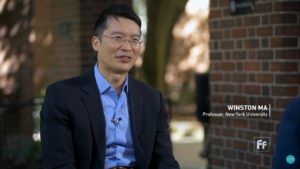
US-developed AI agents got into big trouble as they went rogue. Innovation expert Winston Ma looks at the situation in China, especially Alibaba’s AI platform Accio, and how they make sure human control has the last say on how the AI agents work; he writes at FirstPost.
Winston Ma:
Why bounded authority works
Finding suppliers, comparing quotes and preparing compliance paperwork once took a small business weeks. The agent now does it continuously, within limits the buyer sets. The point at which the business becomes bound stays with a person, so the questions that matter have clear answers: whose deal it is, what the agent was allowed to do, and who catches a mistake before money moves.
The international legal framework points the same way. UNCITRAL’s 2024 Model Law on Automated Contracting recognises contracts formed through automated systems, while making clear that automation does not excuse non-compliance with other legal requirements. The networks’ operator-linked agent credentials and Accio’s approval gate serve one principle at two layers of the same transaction: an agent acts only within authority that a known party has granted and stands behind.
Next: Portable proof of authority
Today the approval record lives inside one platform. As suppliers deploy agents of their own, the next generation of tools should let that record travel, so the other side of a deal can verify what a buyer’s agent was authorised to do. Cross-network identity frameworks are the natural foundation.
Confidentiality is a second design frontier. Alibaba says its agent can use the best terms from one supplier as a reference point in talks with others, a powerful feature that needs care where quotes are confidential.
Three steps would accelerate progress:
Businesses should write down each agent’s mandate and keep human approval at binding terms and payments.
Platforms should build review screens that show what changed, and flag confidential supplier terms before an agent reuses them.
Policymakers should make agent identity interoperable across networks and borders, so that trust built in one ecosystem is recognised in another.
Who signs
The race in agentic commerce is often framed as a contest over autonomy. The more durable advantage is provable authority: who the agent is, what it is allowed to do, and who stands behind the commitment.
That combination can give a small importer in Lagos or Ho Chi Minh City the leverage of a large trading house: months of sourcing work done in hours, with the commitment still its own. Payment networks are building ways to verify who an agent is and whom it represents. Accio shows what comes next: agents that do the work, and people who sign. Together, they give AI agents what agency law has always asked of human ones.
Online shopping used to be a fast-growing retail segment in Chna, but growth is dropping, says consumer expert Ashley Dudarenokat Asia One. Influencers feel the pressure after they have been winner for the past years now AI is gaining pace, she adds.
Asia One:
The industry is grappling with a weaker consumer environment, where retail sales rose just 0.4 per cent in August on the year, down from July’s 0.6 per cent, while growth of 1.1 per cent over the first eight months of 2026 reflected sluggish household spending.
Yet livestreaming has reshaped China’s shopping habits, with online retail sales exceeding 36 per cent in 2025, up from less than 18 per cent in 2021.
“It is still growing, but the growth is a lot more difficult,” said Ashley Dudarenok, founder of digital consultancy Chozan.
“Merchants need to compete a lot harder for customers’ wallets … and the expectations of customers are as high as ever, but the budgets are lower.”…
The debate is also playing out among regulators and consumers. Rules for clear labelling of AI-generated content took effect in September 2025, while ByteDance-owned Douyin – China’s version of TikTok – has banned fully AI-generated livestreams and requires disclosure of the use of digital hosts.
Backlash has greeted some influencers who revealed that AI avatars were appearing in their place.
“I think a human livestreaming host is sort of an endangered species, but it depends,” Dudarenok said, adding that as AI-generated content becomes more common, consumers may gravitate back toward the authenticity of human hosts.
“I don’t think they’re going to disappear completely, but the less successful hosts … they will have to use better tools or change occupations.”
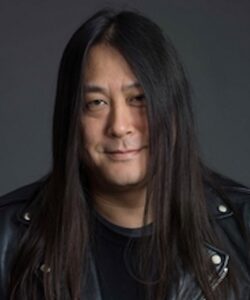
Both the US and Europe regularly fear new China shocks and unsettling technological innovations like BYD and DeepSeek. China veteran Kaiser Kuo, host at the renowned Sinica Podcast, discusses China’s position in the fast-moving developments that outflank its global competitors at Renewable Matter.
Renewable Matter:
Returning to the shocks that Americans, but also Europeans, are still experiencing every time China overtakes them in some cutting-edge sector such as renewables, electric cars (BYD) or AI (DeepSeek), what will be the next major shock we should expect?
If only I knew, so I could invest in it! One thing is clear, though: China is investing heavily in nuclear fusion. We are likely to witness breakthroughs in new materials, battery chemistry and quantum computing. But the biggest advances will probably come from the life sciences and biotechnology, which receive less attention. China has built a very solid foundation in pharmaceutical discovery: in the past, it merely acted as an external supplier of molecular analysis services on behalf of major Western biopharmaceutical companies. Now, however, many of these Chinese companies are operating independently, and I believe that in the coming years we will see significant pharmaceutical discoveries emerging from China.
The “technological containment” that the United States is trying to impose on China is a policy that cuts across party lines, from Democrats to Republicans. But what do scientists, both Chinese and American, make of this? Is there no hope of achieving constructive scientific cooperation?
I believe that scientists on both sides consider this policy an absolute tragedy. It is a loss for all of humanity that collaboration between the scientific communities of China and the United States – two of the largest, best-funded and most creative in the world – is suffocated by geopolitics. Unfortunately, in the United States, even within the scientific community, many people are still obsessed with national security, convinced that China must be kept away from the most advanced technologies. The debate over which policy is the right one is still ongoing. In China, however, there is no doubt. They are angry, believing this policy to be fundamentally immoral, but at the same time they believe it has sparked a fuse, forcing scientists and engineers to redouble their efforts towards innovation. And China has indeed achieved considerable progress towards greater self-sufficiency, particularly in the production of semiconductors.
However, if we take AI as an example, China is implementing much stricter regulations than the US. Why, then, are the Americans so afraid of China’s technological development?
I interpret this mainly as a projection: Americans believe that any other power would behave just as they do. Faced with enormous capabilities that would allow a country to aspire to global hegemony, they believe that any nation possessing such technological strength would exercise it immediately. In essence, they think that China would do what they imagine the United States would do. Never thoroughly analysed, this assumption is the basis for much of the paranoia emerging, particularly from Silicon Valley. But I do not think it is a valid hypothesis. In fact, it risks becoming a self-fulfilling prophecy. Relating to another country on this basis means demonstrating your own bad faith, proving that you are willing to bring it to its knees. How can anyone think this will not influence their perception? It will generate precisely the kind of hostility that was taken for granted from the outset, but it was their own actions that created it. This, at least, is my interpretation. I would argue that an open and collaborative approach across all these technological frontiers would have significantly reduced China’s propensity to try to exert leverage over the United States.
China drone delivery already moves restaurant orders, medical samples, and essential goods along approved aerial routes. Drones connect merchants and institutions with smart lockers, landing stations, and local delivery teams.
As of March 2026, Meituan’s Keeta Drone reported more than 880,000 completed deliveries across 70 routes in cities including Shenzhen, Beijing, Shanghai, Guangzhou, Hong Kong, and Dubai. Those figures describe its combined international network, not mainland China alone.
The commercial significance extends beyond faster takeout. China is building an air-ground logistics layer where software, aviation rules, physical infrastructure, and human couriers work together.
China’s low-altitude economy has grown rapidly, but delivery aircraft represent only one part of its wider drone industry.
The Civil Aviation Administration of China reported more than 4.788 million registered drones and 26.414 million drone flight hours during the first half of 2026. These totals cover all drone categories, including non-logistics applications. They should not be mistaken for delivery-specific figures.
Within that broader system, Keeta Drone says its delivery network serves parks, campuses, offices, residential communities, healthcare facilities, and public spaces. Its platform provides access to more than 160,000 products across its operating regions.
In Shanghai’s Pudong district, a drone delivery covers 5 kilometers in 7 minutes versus 35 minutes by scooter during peak hours. This time compression creates measurable cost advantages for fresh groceries, pharmaceuticals, and prepared meals—categories where speed directly affects product quality and customer satisfaction.
This distinction matters. National drone registrations show industrial depth, while route counts and completed deliveries show actual commercial deployment.
Despite geopolitical tensions, China’s consumers still line up for American fast food chains, says Shanghai-based business analyst Shaun Rein in AP. “Despite political tensions between the U.S. and China, Chinese actually still go crazy for American brands,” said Shaun Rein.
AP:
American fast-food companies are expanding their presence in China
Last month, Chinese customers lined up in the rain for the opening of the first Church’s Texas Chicken in Shanghai. Church’s plans at least 600 more across China. Wendy’s says it anticipates opening 1,000 restaurants there over the next decade.
Established players are deepening their reach as well. McDonald’s plans 1,000 new Chinese restaurants this year and 10,000 total by 2028. Burger King, which arrived in China in 2005, says it expects to triple its store count to 4,000 by 2035.
“Despite political tensions between the U.S. and China, Chinese actually still go crazy for American brands,” said Shaun Rein, founder and managing director of the Shanghai-based China Market Research Group.
KFC became the first major American fast-food chain to enter mainland China when it opened a Beijing restaurant in 1987. At the time, it was viewed as a premium destination worth taking a date to, Rein said. McDonald’s and Pizza Hut arrived in 1990.
“McDonald’s and KFC were a beacon of health and hygiene compared to what you had in the rest of the market,” Rein said.
China is now KFC’s largest market by far. The Kentucky-born fried chicken chain counts about 13,000 restaurants in China, compared with around 3,750 in the U.S. American brands see room for further growth.e>
China has used its massive oil reserves to prevent oil prices from going further through the roof, says business analyst Shaun Rein. But that might not happen again, he warns in a discussion with David Lin.
Alvin Wang Graylin, author of Our Next Reality: Preparing for the AI-powered Metaverse, worked both in China and the US on AI. In a discussion with Nathan B. Jones, his main argument is that both countries are not in an AI race, and the largest misconception is this wrong idea an arms race is developing. Nobody has won the electricity race; the same goes for AI, he argues.
Consumer analysts say singles are also spending more on video games, AI companions and micro-dramas, soap opera-like shows with episodes under two minutes.
“When you’re back home from work and it’s 10 p.m. and you’ve already eaten, if you had a husband or wife, you would talk to them,” said Ashley Dudarenok, founder of China market consultancy ChoZan.
“If that companionship is missing, you are left with subscriptions to games, to streaming, and that is a huge, huge trend that is reshaping the way people entertain themselves.”
Dudarenok said that China’s vast and competitive consumer market could accelerate the development of products and services for people living alone and eventually export them to the rest of the world.
AI companions and micro-dramas have already gained traction in the US. Companies there are also increasingly courting solo diners. Domino’s Pizza announced recently it would begin offering small rectangular pies designed for one.
Previously, businesses and governments typically treated singledom as a temporary stage before marriage, Dudarenok points out.
“We need to start thinking about single living and this new economic model as something that is here to stay,” she said.
Ahead of a possible meeting between presidents Xi Jinping and Donald Trump, business analyst Shaun Rein, author of The Split: Finding the Opportunities in China’s Economy in the New World Order, is explaining how the US is boosting China’s stature globally. The US is losing its former friends in Australia, Canada, and Europe, while domestically, inflation is killing the US economy through a trade war with China, he tells at Moats.
So your next book coming out is a historical novel inspired by China’s first feminist, Qiu Jin . Can you tell us a little bit about her?
Oh, Qiu Jin was and is absolutely fabulous. She was the most colorful and extraordinary character in contemporary China. We’re talking about the end of the Qing dynasty. She was beheaded in 1907, four years before the downfall. In fact, she had a role in the downfall of the Qing. At that time, women were expected to stay at home but she had a public role. She ran a school to train insurgents trying to overthrow the Qing dynasty. They were Manchus, and the majority of the population were Han people like me.
Qiu Jin was a very colorful character, extraordinary. She loved to cross dress. She loved to dress up. She was a woman but she loved to put on men’s clothes and she was very into martial arts and she rode horses, championed for women to ban the foot binding, give up foot binding, and things like that.
Then she was beheaded in 1907 for organizing a military uprising. Because of her death changed public opinion, so many people began to stand against the Manchus. She was an absolutely wonderful character. She drank like a fish. She wrote her poems. Hopefully, after the publication, I hope I can sell the film rights.
Many young feminists, for example, in a few days, I’m going to see Lee Maizi. She organized a queer choir, and I’m going to see her on Saturday. Okay. Yes, people like her, she looks up to Qiu Jin, and one of the songs Qiu Jin composed herself is called nüquanzhige (女权之歌), the Song of the Feminist, and she, the lesson is we have to fight. I think we cannot just sit around waiting, praying that gender equality will be materialized. I think you have to fight for it. And I’m very pleased to see that young women still find interesting ways to do so in China.
Q:Do you consider it to be a logical next step for governments to create AI sovereign wealth funds given that sovereign funds are already the largest investors in AI?
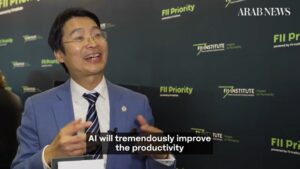
WM: Exactly. The U.S. sovereign fund (and its Intel investment, among others) is a new phenomenon, but my Hunt for Unicorns book, which was published in 2020, was already talking about how sovereign funds globally — from the Middle East, China, Korea, Singapore, and Southeast Asia — were investing in tech, including AI.
Today government sovereign funds are the biggest investors in AI. Look at Anthropic: it’s the most valuable AI startup (and its CEO said the total addressable market exceeds $30 trillion). Most recently, the two largest rounds were led by Singapore GIC, the Singapore Government Investment Corporation.
The same is true for data centers. There’s a digital infrastructure investment consortium with the potential to invest $100 billion known as the Artificial Intelligence Infrastructure Partnership (AIP), co-led by BlackRock, the world’s largest alternative assets manager, and its subsidiary Global Infrastructure Partners (GIP), as well as a few major sovereign wealth funds, including Singapore’s Temasek, Abu Dhabi’s MGX, and Kuwait’s KIA.
When it comes to public AI stock trading, Norway’s sovereign investment fund is one of the largest public market investors in Nvidia, which dominates the AI chip layer, and it has huge voting power in many AI and tech companies because of its public holdings. These are 100% state-owned investment vehicles investing into the full AI stack.
The year 2026 is the start of a new phase: since public investment funds like those listed above are already financing the entire AI stack, formally establishing AI’s own sovereign wealth funds — such that AI gains can be shared as public benefits — is the natural institutional evolution.
Q: There is a very good reason for governments to invest. The Tony Blair Institute for Global Change noted in a recent report that compute is not just a source of scientific and economic progress, but the new benchmark of global power economically and geopolitically.
WM: It’s not the compute alone; it’s the overall AI stack.
Q: This is why the whole issue of sovereignty has become so important in Europe because it doesn’t control the full stack.
WM: That is precisely the point. True AI sovereignty requires alignment across all five layers: securing energy baseload, manufacturing silicon, building data centers, hosting proprietary or open-weight models, and deploying productivity applications.
China has focused heavily on using sovereign vehicles to capitalize this stack. In addition to the well-known CIC sovereign wealth fund, where I worked as a financial investor managing a global market portfolio, China also established the National Integrated Circuit Industry Investment Fund (“Big Fund”). Its $47.5 billion Phase III, launched in late 2024, directly targets advanced semiconductors, yielding major market listings like ChangXin Memory Technologies (CXMT) — China’s domestic answer to both U.S.-based Micron and South Korea’s Samsung.
In January 2025, Big Fund III co-founded the $8.2 billion National AI Fund. When Chinese AI startup DeepSeek raised its external financing round, the National AI Fund contributed a ¥1 billion check. Although smaller than the non-voting capital injected by commercial giants like Tencent and CATL, the state fund took the only position with direct governance voting rights.
Q: So when the U.S. government takes a 10% share in Intel, they’re essentially copying China?
WM: Exactly. Trump is taking a page out of China’s sovereign AI playbook — that’s the title of my Financial Times op-ed in June.




 Both the US and Europe regularly fear new China shocks and unsettling technological innovations like BYD and DeepSeek.
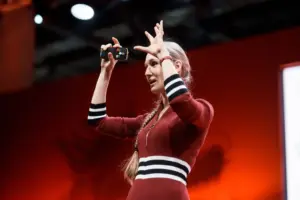
 Reading body language during negotiations is an art and between different cultures it is even harder.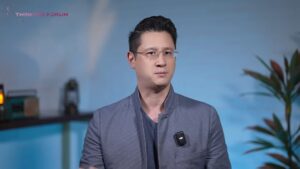
 Dropping birth figures in China are changing the country’s consumer market profoundly, as singles move upwards in spending patterns, says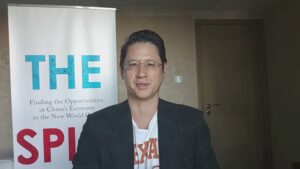
 .
.