Tuesday, November 18, 2025

The silver swans: an overlooked luxury consumer – Ashley Dudarenok


Ashley Dudarenok

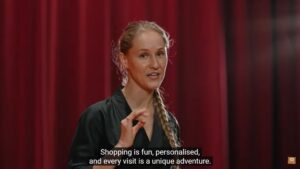
The youngsters are China’s most studied group of consumers, but branding expert Ashley Dudarenok warns brands should not overlook the country’s silver swans as major consumers, she explains in the Jing Daily. “Ignoring them is not just a missed opportunity; it’s a strategic blunder,” she writes.

Ashley Dudarenok:

In the relentless pursuit of Gen Z and millennials, the marketing world has turned a blind eye to one of the most lucrative consumer cohorts in China: the affluent retiree. Dismissed by many brands as a legacy segment, these individuals — predominantly women aged 60 and over — are, in fact, a powerful economic force.

They are the “Silver Swans”: digitally savvy, brand loyal, and endowed with high disposable income and the freedom to spend it on themselves. While the industry chases youth, this mature audience represents a vast blue ocean of opportunity for luxury brands bold enough to reimagine their narratives around elegance, experience, and well-being.

This generation, which witnessed China’s economic miracle firsthand, is now enjoying its fruits. Their consumption is not for social clout but for self-fulfillment, making them a uniquely stable and valuable customer base. Ignoring them is not just a missed opportunity; it’s a strategic blunder.

More in the Jing Daily.

Ashley Dudarenok is a speaker at the China Speakers Bureau. Do you need her at your meeting or conference? Do get in touch or fill in our speakers’ request form.

Are you looking for more experts on China’s luxury consumers? Do check out this list.

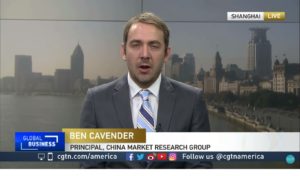
Buying domestic firms new strategy of foreign brands – Ben Cavender


Ben Cavender

L’Oreal bought this week a second Chinese cosmetic company to strengthen its market position in China, a strategy becoming more common among foreign brands, says branding expert Ben Cavender to Reuters.  Fierce domestic competition and a sluggish consumer market are the basis of this change of strategy.

Reuters:

The investment in Lan comes after L’Oreal paid 442 million yuan ($62 million) for a 6.67% stake in Chando, as disclosed by the Shanghai-based company last month in its prospectus for an IPO in Hong Kong.

China has been challenging for international players, as an increasing proportion of its $75 billion beauty and personal care market has been won in recent years by domestic brands, dubbed C-Beauty. At the same time, overall growth has slowed, with consumer confidence hit by a prolonged property crisis and widespread concerns about job stability.

Buying stakes in well-known domestic names could be a shortcut for L’Oreal to piggyback on C-beauty’s momentum, said Ben Cavender, managing director at Shanghai-based China Market Research Group.

“L’Oreal and other international brands face a tremendous amount of pressure from domestic brands that are iterating new products faster, and often have been more aggressive at marketing new skincare ingredients, concepts, and routines,” he said.

Following its third-quarter earnings last month, L’Oreal CEO Nicolas Hieronimus said the group’s China business grew around 3% in the quarter, its first increase in two years.

More at Reuters.

Ben Cavender is a speaker at the China Speakers Bureau. Do you need him at your meeting or conference? Do get in touch or fill in our speakers’ request form.

Are you looking for more consumption experts? Do check out this list.
Tuesday, November 11, 2025

TikTok, Temu and Shein get branding better than the West – Björn Ognibeni


Bjorn Ognibeni

TikTok, Temu, and Shein are better in branding than most Western brands, argues branding expert Björn Ognibeni on his weblog. The result of this miscalculation is evident in performance differences: While many Asian platforms boast strong user retention and high time spent on site, Western providers are struggling with declining conversion rates and rising acquisition costs.

Björn Ognibeni:

Measurability is complex (how can trust building be quantified?), ROI seems uncertain, and impatience for quarterly results leads to short-term tactics. But when comparing the branding strategies of Western and Chinese companies, three areas of missed opportunities become obvious:

  1. Untapped Discovery Potential: Western e-commerce is ideal for when you know exactly what you’re looking for. But what about those times when people want to browse, find inspiration and discover something new? Chinese platforms show us: Discovery-driven shopping can complement search well and offer a significant growth opportunity, but only if it is done right and does not annoy customers.

  2. The Social Commerce Misunderstanding: Western companies often misunderstand ‘social commerce’, viewing it merely as a way of buying reach on Instagram or TikTok, when in fact it is so much more than that. In Asia, where social thinking has always been more ingrained in the culture, companies have realized that it’s about building genuine relationships. This approach might also appeal to Western customers because the desire for social connection is universal, not just cultural.

  3. Enshittification of the UX: The creeping deterioration of the user experience due to excessive advertising is rendering Western platforms increasingly unusable. Search results are flooded with sponsored products and every click leads to more ads. And to customer frustration.

The result of this miscalculation is evident in performance differences: While many Asian platforms boast strong user retention and high time spent on site, Western providers are struggling with declining conversion rates and rising acquisition costs.

More at Björn Ognibeni’s weblog.

 Björn Ognibeni is a speaker at the China Speakers Bureau. Do you need him at your meeting or conference? Do get in touch or fill in our speakers’ request form.

Are you looking for more branding experts at the China Speakers Bureau? Do check out this list.

Monday, November 10, 2025

How youngsters avoid China’s rat race – Ashley Dudarenok


Ashley Dudarenok

A silent exodus is taking place, as China’s youngsters migrate from the big cities to cheaper and more relaxed places in the country, like Dali in Yunnan, Chengdu in Sichuan, and Xiamen in Fujian, notes branding expert Ashley Dudarenok in the Jing Daily. What does this mean for the larger brands, she explains.

Ashley Dudarenok:

This digital nomadism has a distinctly Chinese flavor. It’s less about roaming the world and more about finding a stable, better base within the country. It represents a mature, pragmatic approach to leveraging technology for lifestyle design, a concept that was unthinkable a decade ago.

This silent exodus is not just a social trend; it’s a seismic shift in consumer dynamics that demands a new strategy from brands.

  1. Local experiences and pop-ups: Instead of only focusing on flagship stores in Beijing or Shanghai, brands can open curated pop-ups, boutique shops, or co-branded experiences in cities like Chengdu, Xiamen, or Dali. These spaces could serve coffee, offer co-working or creative areas, or host events that resonate with the local lifestyle.
  2. Lifestyle-oriented products: Products that enhance quality of life, such as premium coffee, artisanal foods, home décor, wellness items, or portable tech for remote work, will appeal to consumers seeking comfort and convenience in smaller cities.
  3. Value-based marketing: Messaging should highlight sustainability, craftsmanship, and authenticity rather than just luxury or prestige. Consumers in these cities respond more to narratives that reflect who they are and how they live, rather than what they own.
  4. Integrated living-work solutions: Spaces that combine living, working, and social interaction — think converted apartments or hybrid café-co-working models — could capture this audience, who often rent and adapt homes for both work and life.

The evolution of “Lying Flat” from a protest to a proactive lifestyle choice is one of the most significant social trends in modern China. It signals a generational break from the singular, state-promoted definition of success.

China’s youth are not lazy; they are exhausted by an outdated model. They are using their education, digital tools, and economic privilege to architect lives of meaning on their own terms. Their silent exodus is creating new cultural hubs, empowering a new generation of artisans, and fundamentally altering the consumer map.

For brands, the message is clear: the future of Chinese consumption is not just about what is being bought, but about where and why it’s being bought. Understanding this search for a better life is the key to unlocking the next chapter of growth.

More at the Jing Daily.

Ashley Dudarenok is a speaker at the China Speakers Bureau. Do you need her at your meeting or conference? Do get in touch or fill in our speakers’ request form.

Are you looking for more experts on cultural change at the China Speakers Bureau? Do check out this list.

How China is winning the trade war with the US – Shaun Rein


Shaun Rein

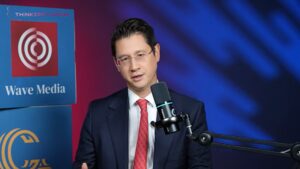
Shanghai-based business analyst Shaun Rein, author of  The Split: Finding the Opportunities in China’s Economy in the New World Order,  explains why China is winning the trade war with the US and has been preparing for a new exchange with the US over the past seven years, he says at WTFinance.

Shaun Rein is a speaker at the China Speakers Bureau. Do you need him at your meeting or conference? Do get in touch or fill in our speakers’ request form.

Are you looking for more experts on managing your China risk? Do check out this list.
Friday, November 07, 2025

Peddling between China’s and US e-commerce – Sharon Gai


Sharon Gai

Sharon Gai, author of Ecommerce Reimagined: Retail and Ecommerce in China, started her career in Alibaba’s early days and now watches the e-commerce evolution in both China and the US. She discusses her career with Grace Shao, touching on AI, branding, and innovation.

Sharan Gai is a speaker at the China Speakers Bureau. Do you need her at your meeting or conference? Get in touch or fill in our speakers’ request form.

Are you looking for more innovation experts at the China Speakers Bureau? Do check out this list.

Thursday, November 06, 2025

Can Starbucks compete in China? – Ben Cavender


Ben Cavender

Starbucks sold 60 percent of its China business earlier this week, hoping that local input could help its operation. But Shanghai-based business analyst Ben Cavender sees that the US company still has major difficulties in cracking the Chinese market, he writes at WHTC.com.

WHTC:

Yet challenges remain. Ben Cavender, managing director at Shanghai-based China Market Research Group, said Starbucks’ brand is caught in a “really awkward position” in China.

Budget-conscious consumers are flocking to Luckin or Yum China’s KCOFFEE, while younger and more sophisticated drinkers are gravitating to boutique cafés offering better ambiance and quality at similar prices.

“Starbucks is competing with an offer which by definition is a bit more unique and funky and interesting to the consumer,” Cavender said.

Starbucks China division generated around $3.1 billion in net sales last year, according to quarterly filings, compared to nearly $3 billion in 2024. Luckin reported slightly more than $3.6 billion in sales for the fiscal year ending in February.

Starbucks did not disclose the licensing terms in the deal. Yum China, which launched KCOFFEE in 2022, pays licensing fees to Yum equal to 3% of net system sales, according to filings.

More at WHTC.

Ben Cavender is a speaker at the China Speakers Bureau. Do you need him at your meeting or conference? Do get in touch or fill in our speakers’ request form.

Are you looking for more stories by Ben Cavender? Do check out this list.

Friday, October 31, 2025

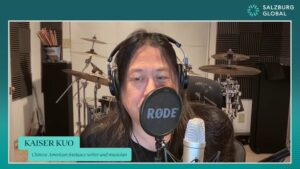
How the China debate developed in the West – Kaiser Kuo


Kaiser Kuo

China veteran Kaiser Kuo, host of The Sinica Podcast, looks back at how the debate on China has developed in the West over the past forty to fifty years, and here it ended now, in a debate with host Eric Olander of Conversation Changers. The discussion on what China wants says more about the West than about China, he argues.

Kaiser Kuo is a speaker at the China Speakers Bureau. Do you need him at your meeting or conference? Do get in touch or fill in our speakers’ request form.

Are you looking for more stories by Kaiser Kuo? Do check out this list.

Wednesday, October 29, 2025

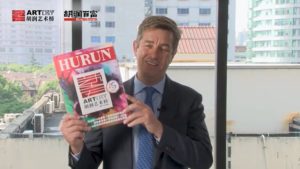
Hurun Rich-list reaches record height – Rupert Hoogewerf


Rupert Hoogewerf

The Hurun China rich-list has reached a record height, says Rupert Hoogewerf,  chairman and chief researcher of the Hurun Report, at the release of the 2025 ranking, according to YiCai Global. Both new technology companies and a surprising export have added to the results, he adds. Also, the rising stock markets added to the wealth of China’s rich.

Yicai Global:

A total of 1,434 individuals with personal fortunes exceeding CNY5 billion (USD700 million) made this year’s list, up 31 percent from 2024. Their combined wealth surged 42 percent to nearly CNY30 trillion. Among them, 1,198 saw their wealth rise, including 376 new entrants, while 276 saw flat or lower fortunes, and 38 dropped off the list. The average age of those on the list was 60, one year younger than last year.

Rupert Hoogewerf, chairman and chief researcher of the Hurun Report, said the number of entrepreneurs on the list has nearly reached a historical peak, driven by a sharp rebound in China’s stock markets — with the Shanghai Composite Index, Shenzhen Component Index, and Hang Seng Index all up 40 percent to 50 percent year on year.

Hoogewerf added that the rise of new technology firms and a robust export market have also bolstered the ranks of China’s wealthy. He noted that the best-performing sectors over the past year included new energy vehicles, consumer electronics, new consumption, computing power, biomedicine, and securities services.

More at Yichai Global.

Rupert Hoogewerf is a speaker at the China Speakers Bureau. Do you need him at your meeting or conference? Do get in touch or fill in our speakers’ request form.

Are you looking for more stories by Rupert Hoogewerf? Do check out this list.

Monday, October 27, 2025

How Europe missed its chances in the trade war between China and the US – Shaun Rein


Shaun Rein

Europe could have been a winner in the trade war between China and the US, says political analyst Shaun Rein at the Thinkers Forum. Not only did they lose the opportunity to win from the trade war, but they are going to be the larger economic losers of the next decade, becoming an open-air museum, he adds.

Shaun Rein is a speaker at the China Speakers Bureau. Do you need him at our meeting or conference? Do get in touch or fill in the speakers’ request form.

Are you looking for more political experts on the China Speakers Bureau? Do check out this list.


China’s wealthy move away from displaying big brands – Ashley Dudarenok


Ashley Dudarenok

China’s wealthy individuals are shifting away from displaying big brands to showcase their wealth, notes luxury expert Ashley Dudarenok at Jing Daily. “Their new currency is not cash, but time; their new status symbols are not displayed on a shelf, but experienced in the mind and body,” writes Dudarenok.

Ashley Dudarenok:

For decades, the global luxury narrative around China has been written in tangible, logo-heavy script: the Birkin bag, the Rolex watch, the Ferrari. These were the undeniable status symbols of a new economic powerhouse. But a profound and lucrative shift is underway.

China’s most discerning elite are moving beyond the material. Their new currency is not cash, but time; their new status symbols are not displayed on a shelf, but experienced in the mind and body. Welcome to the era of “invisible luxury,” where the most extravagant purchases leave no physical trace.This pivot from the tangible to the intangible — encompassing hyper-personalized wellness, exclusive education consulting, and spiritual enlightenment — signals a more mature market in search of something far more profound than social validation: longevity, advantage, and meaning.

The quest for health has evolved from general wellness to a high-tech, data-driven pursuit of longevity, or even “bio-enhancement.” This is no longer about a generic vitamin IV drip; it’s about comprehensive, member-only protocols.

More in the Jing Daily.

Ashley Dudarenok is a speaker at the China Speakers Bureau. Do you need her at your meeting or conference? Do get in touch or fill in our speakers’ request form.

Are you looking for more luxury experts at the China Speakers Bureau? Do check out this list.

Thursday, October 23, 2025

Why China has the upper hand in the trade war – Shaun Rein


Shaun Rein

Shanghai-based business analyst Shaun Rein explains why China has the upper hand in the current trade war with the US. For anything the US does not want to send to China, China has an alternative to hit back, he says at the Thinkers Forum.

Shaun Rein is a speaker at the China Speakers Bureau. Do you need him at your meeting or conference? Do get in touch or fill in our speakers’ request form.

Are you looking for more political experts at the China Speakers Bureau? Do check out this list.

Wednesday, October 22, 2025

China’s consumers are driven by economy anxiety, not nationalism – Shaun Rein


Shaun Rein

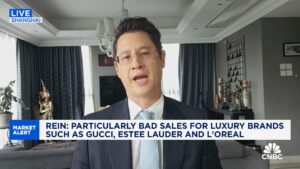
Shanghai-based business analyst Shaun Rein reports on the latest research on China’s consumers. While spending might be down for the next months, consumers are not driven by nationalism, he tells CNBC. It is economic anxiety that makes the difference, he says.

Shaun Rein is a speaker at the China Speakers Bureau. Do you need him at your meeting or conference? Do get in touch or fill in our speakers’ request form.

Are you looking for more consumption experts at the China Speakers Bureau? Do check out this list.

Tuesday, October 21, 2025

How the US quietly expanded its rules against China business – Arthur Kroeber


Arthur Kroeber

Technically, the trade talks between China and the US, and even meetings between Xi and Trump, are on the agenda, but the US has quietly curtailed US exports to China in September, says business analyst Arthur Kroeber in the South China Morning Post. The ramifications of the US rule change became vividly apparent on September 30, when the Dutch government seized control of the chip firm Nexperia.

South China Morning Post:

Until recently, US exporters had to obtain a government licence to do business with any of the entities included on the lists. But in late September, the bureau broadened its rules: exporters now face restrictions not only when dealing with entities on the lists, but also with any company at least 50 per cent owned by entities on the lists.

US officials “depict this as a technical move” that closes an obvious loophole, but in reality “its impact is far from technical”, said Arthur Kroeber, partner and head of research at research firm Gavekal, in a research note published last week.

In practice, the new rules effectively expand the number of sanctioned companies, “probably by thousands or tens of thousands”, Kroeber said. Many of the companies affected by the rule change are Chinese.

What’s more, the new rules create an onerous compliance burden for businesses, as the responsibility for figuring out whether a given company is majority-owned by entities on the blacklists lies with US exporters. That means businesses must now conduct forensic due diligence on the ownership structure of many customers, Kroeber said.

The ramifications of the US rule change became vividly apparent on September 30, when the Dutch government seized control of the chip firm Nexperia.

Nexperia is a local company that in 2019 became majority owned by Wingtech, a Chinese chip firm that was put on the US entity list in 2021.

As Nexperia would be vulnerable to US sanctions under the new rules, the Dutch government’s move to take over the company and oust its Chinese CEO was necessary to preserve the firm’s unfettered access to the US market, Kroeber said.

More at the South China Morning Post.

Arthur Kroeber is a speaker at the China Speakers Bureau. Do you need him at your meeting or conference? Do get in touch or fill in our speakers’ request form.

Are you looking for more strategic experts at the China Speakers Bureau? Do check out this list.

Monday, October 20, 2025

China’s influencer’s economy – Ashley Dudarenok


Ashley Dudarenok

China’s influencer economy in 2025 is bigger, faster, and more competitive than ever, writes marketing expert Ashley Dudarenok in an overview of this booming industry in Chozan. “In 2024 alone, MCNs — multi-channel networks — were behind many of the country’s record-breaking livestream sales and viral content trends,” she adds.

Ashley Dudarenok:

China’s influencer economy is bigger, faster, and more competitive than ever. In 2024 alone, MCNs — multi-channel networks — were behind many of the country’s record-breaking livestream sales and viral content trends. They’re the engines connecting brands with top creators, building campaigns across Douyin, Kuaishou, Bilibili, and RedNote, and turning social buzz into measurable sales.

From e-commerce giants managing thousands of livestream hosts to boutique agencies producing high-concept micro-dramas, MCNs are shaping the industry.

  • How products launch
  • How stories are told, and
  • How consumers make buying decisions in China’s digital-first market.

Understanding these networks isn’t optional for brands inside and outside China — it’s essential for making the right partnerships and entering the market with impact.

Thinking about working with a Chinese MCN?
Choosing the right partner depends on your category, audience, and campaign goals. Platform strengths, influencer network quality, and track record all matter.

The full article is available here.

Ashley Dudarenok is a speaker at the China Speakers Bureau. Do you need her at your meeting or conference? Do get in touch or fill in our speakers’ request form.

Are you looking for more stories by Ashley Dudarenok? Do check out this list.


What the West can learn from China – Kaiser Kuo


Kaiser Kuo

China veteran Kaiser Kuo looks at the lessons the West can learn from China, and how the China debate needs a much-needed reshuffle, a major essay at the Ideas Newsletter. “The question is whether we will meet it with the rigorous self-examination that has historically enabled democratic renewal, or retreat once more into the comforting myths that have blinded us to both our weaknesses and our rivals’ strengths,” Kuo writes.

Kaiser Kuo:

This essay does not rehearse the familiar bill of particular on China – constraints on political pluralism and independent media; expansive security powers and preemptive detention; pressure on religious and ethnic expression; and episodes of extraterritorial coercion—not because those concerns are trivial, but because the task here is different. We’ve all learned to recite that litany, as a way of protecting ourselves from what real comparison might imply. The aim here is to confront, with intellectual honesty, what China’s achievements oblige us to reconsider about modernity, state capacity, forms of political legitimacy, and our own complacencies. Recognizing real costs can coexist with taking the magnitude of transformation seriously. This argument asks us to face squarely what has been accomplished and then measure ourselves against it.

And let me be clear: This reckoning is not a surrender. It is not an argument for abandoning liberal values, declaring authoritarian systems superior, or slavishly imitating features of China’s governance. It is instead a call for the kind of frank, sober assessment that genuine confidence requires—the willingness to acknowledge challenges directly, to learn from others’ successes even when they unsettle our assumptions, and to strengthen our own institutions through clear-eyed recognition of their shortcomings rather than defensive denial of their failures. Liberal democracy is indeed undergoing a profound crisis, but that crisis need not be terminal. The question is whether we will meet it with the rigorous self-examination that has historically enabled democratic renewal, or retreat once more into the comforting myths that have blinded us to both our weaknesses and our rivals’ strengths.

The full essay you can read here.

Kaiser Kuo is a speaker at the China Speakers Bureau. Do you need him at your meeting or conference? Do get in touch or fill in our speakers’ request f0rm.
Are you looking for more stories by Kaiser Kuo? Do check out this list.