Weblog with daily updates of the news on a frugal, fair and beautiful China, from the perspective of internet entrepreneur, new media advisor and president of the China Speakers Bureau Fons Tuinstra
Heytea started in 2012 as a premium tea brand, but it has since become entangled in the China tea wars, following a trend to go cheap. Consumer experts Ashley Dudarenok and Arnold Ma are two of a range of experts figuring out whether Heytea can survive in Campaign Asia. will international growth offset China’s quality challenges?
Campaign Asia:
Heytea helped define China’s modern tea boom. Launched from an alleyway stall in 2012, the brand popularised cheese tea and built a reputation for design-led, real-ingredient drinks that reset expectations in a crowded category. By 2025, it had grown to more than 4,000 stores across eight countries. Once positioned as a premium tea brand, Heytea turned to franchising and price cuts to chase mass-market growth, only to face quality control issues and oversaturation complaints from netizens about inconsistent stores clustered too closely together. Last year’s pivot saw Heytea issue two internal letters rejecting the ‘numbers game’ and ‘involution’ (内卷), competition for competition’s sake, urging a return to user focus and brand differentiation. Despite this, the brand launched Heytea Mini, a lower-priced sub-brand, while accelerating global expansion with 100+ stores across Asia, Europe, and North America, tailoring drinks for local palates. Campaign Asia-Pacific asked four experts whether Heytea can balance accessibility and premium positioning amid domestic pressures and price wars. And will international growth offset China’s quality challenges?
Ashley Dudarenok, founder & managing director Chozan: Heytea fell into the classic premium trap, building a killer ‘Starbucks of tea’ image, then slashing prices to battle low-cost rivals like Mixue amid economic squeeze, diluting their credential. Their anti-involution U-turn is the real story, publicly halting price wars and reinvesting in high-concept stores, genuine innovation like health-focused teas, and savvy cultural collabs to reclaim premium status. Global expansion isn’t a quick China fix but a smart halo play. Flagships in New York or Tokyo boost domestic prestige, reinforcing aspirational appeal back home without relying on short-term revenue offsets. Success hinges on three disciplined moves: elevating in-store experiences as destinations again, driving truly differentiated products, and building cultural capital that outshines gimmicks.
Arnold Ma, CEO/founder Qumin: The topic of ‘Heytea bids farewell to 30 yuan’ even became a trending topic, firing the first shot in the price war of the new tea beverage industry. The entire industry followed suit, with Nayuki, Chabaidao, and Hushang Ayi all offering increasingly lower prices. Heytea’s current reset suggests the brand recognises a hard truth: premium perception in China is fragile, but not permanently lost. Chinese consumers are pragmatic rather than sentimental. They will forgive strategic mistakes if quality, consistency, and intent are visibly corrected. Heytea’s earlier price cuts eroded its craft cred, store consistency and user focus, and its current anti-involution stance is damage control. To rebuild domestically and globally, it needs tighter store planning for better economics, reposition “accessible” as smart value through proven craftsmanship, and lead culturally via aesthetics and storytelling rather than gimmicks. Global expansion offers breathing room with less saturation, but won’t quickly offset China losses amid mid-tier rivals, spending fatigue and execution risks.
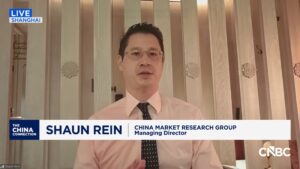
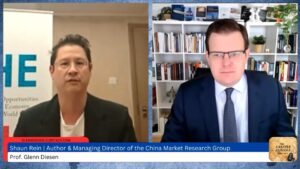
Stagnation is one of China’s economic key issues, but most China experts miss what is really going on because they left the country a decade ago, says Shanghai-based business analyst Shaun Rein to Glenn Diesen, author of “The Split: Finding the Opportunities in China’s Economy in the New World Order”. Unlike the previous financial crisis, the Chinese are sitting on a load of money and they are not in panic, but also do not spend their resources.
While there has been a shift in language on domestic consumption at the recent China’s annual Central Economic Work Conference, leading economist Arthur Kroeber, author of China’s Economy: What Everyone Needs to Know®, does not see a change in policies for China’s economy in 2026 toward supporting the sluggish domestic consumption, he says at a debate at the Asia Society.
Returns on China’s stock markets have been great, but that reflects only marginally on the consumer market, warns Shanghai-based business analyst Shaun Rein at CNBC. Only six percent of Chinese citizens hold equity, unlike, for example, the US, he says. 90 Percent is still trading down and not spending more on luxury goods, he adds.
Hong Kong is economically fast integrating with the rest of the Greater Bay Area (GBA). Hong Kong-based strategy expert Ashley Dudarenok looks at the challenges and opportunities at the GBA in an overview at the Macao News.
Ashley Dudarenok:
Whenever I look at GBA reports, it’s all economic statistics, the number of people, the number of output and all that. But we need to move to tell more compelling human stories instead of just manufacturing powerhouses and potential for integration within the region.
We need to talk about creativity. We need to be talking about lifestyle and real entrepreneurs. We could collectively host some very high profile international events. We could leverage more digital platforms to create engaging content, sharing day-to-day kinds of stuff.
Fostering cultural exchange – we definitely need to do that. Maybe create some GBA sports games, entrepreneurship fund or innovation centre that actually brings global community in those sectors to us. There’s just so much to do on both the marketing side, as well as policy and support side.
Why should someone do business in the GBA?
First of all, it’s a massive consumer market. There is a world-class innovation ecosystem. There’s also a bit of access to global capital, especially for mainland Chinese companies.
Looking at where we are numbers-wise, it is very impressive. Our population is around 86 million people and when it comes to innovation hubs, we are at 75,000 high-tech enterprises.
Of course, global giants like Tencent and Huawei, they’re also based here.
But it’s also a financial gateway. For someone from mainland China, access to going global and global markets through the Hong Kong financial hub is important. Also our access to Pearl River Delta manufacturing facilities and the whole Guangzhou supply chain is also extremely powerful.
I think we have a lot of policy support and government involvement on all sides. The authorities are all very willing to support. They want it to be the launch pad for the future.
Political analyst Victor Shih discusses Xi Jinping’s policies, including AI, government spending, taxation, and his succession at The Global Equations.
Nothing symbolises this better than the Yasukuni Shrine, where, among the war dead, lie 14 class A war criminals. When leaders such as Junichiro Koizumi, Shinzo Abe and Yasuhiro Nakasone visited, China and South Korea erupted in fury. Even silence is politicised: whether a leader sends ritual offerings or stays away, each gesture is decoded for hidden meaning.
Japan’s new government has raised tensions further. Tokyo’s willingness to confront wartime responsibility – never very strong – appears to be diminishing.
Recently, this shift has moved beyond symbolism. Japanese Prime Minister Sanae Takaichi’s comment suggesting that Tokyo might get involved in a conflict over Taiwan jolted Beijing, not only for its strategic implications but because any hint of renewed Japanese military assertiveness is interpreted as a weakening of post-war remorse.
In a region where history is unresolved, even forward-looking security policy is dragged into the past. The ghosts of the 1930s still whisper. It is tempting to ask: why can’t Asia reconcile as Europe did?
When you do not acknowledge your own history, the same mistakes can be made again, says Shanghai-based business analyst Shaun Rein, analysing the recent tensions between China and Japan. Japanese are rewriting history, he argues in the Thinkers Forum, from the hundreds of thousands of sex slaves in China and other parts of Asia, to today.
The EU will remove early 2026 the €150 de-minimis threshold, with the intention to stop cheap imports from Temu, Shein, and Aliexpress from entering the EU untaxed. Björn Ognibeni, co-founder of ChinaBriefs, explains why the plan is EU-propaganda that will not stop cheap products from China, he says at Let’s talk Marketplace.
Most traditional Hollywood film releases fail in China, but Zootopia shows exceptional success. Branding expert Ashley Dudarenok explains in the Jing Daily why this Disney release has been an unprecedented success.
Ashley Dudarenok:
Disney’s localization strategy for Zootopia reveals a sophistication most Western brands lack. The decision to title the film “Crazy Animal City” rather than directly translating “Zootopia” reflects a deep understanding of Chinese linguistic preferences. The name emphasizes urban dynamism and energy, appealing to a population that has experienced the world’s fastest urbanization in a single generation.
Voice casting reveals similar thinking. Disney brought back Ji Guanlin and Chang Chen as Judy and Nick, signaling that continuity and emotional connection matter more than technical perfection.
The most revealing move was physical: Shanghai Disneyland’s Zootopia, opened in 2023, remains the only Zootopia-themed area in any Disney park in the world. Not California. Not Florida. Shanghai. The theme park transforms a film franchise into a lived experience, creating a lasting cultural anchor point.
Release timing demonstrates a similar strategy. Coinciding with Shanghai Disney’s ninth anniversary and its milestone of 100 million cumulative visitors, the film creates synergy between theatrical and experiential entertainment. More than 60 brand collaborations have rolled out, from a China Eastern Airlines Zootopia-themed plane to Luckin Coffee’s limited-edition drinks.
Most striking is Disney’s collaboration with Shanghai Animation Film Studio, the legendary state-owned studio behind Havoc in Heaven. Together, they created four promotional shorts in classic Chinese animation styles: ink wash, stop-motion, paper-cut, and traditional 2D. This is cultural dialogue, blending global IP with artistic heritage.
Leading China economist Arthur Kroeber, author of China’s Economy: What Everyone Needs to Know®, looks at what is known about the upcoming 15th 5-year plan, bound to be approved by the National People’s Congress in March 2026. Most of the known information suggests no major changes, with an ongoing focus on manufacturing rather than consumption, as in the past, he tells Keith Yap in the Front Row Podcast.
China watcher Kaiser Kuo sees now the China hawks in the US are losing ground, after Trump realized China was not the pushover he hoped for, in a wide-ranging discussion at the Nonzero podcast with Robert Wright.
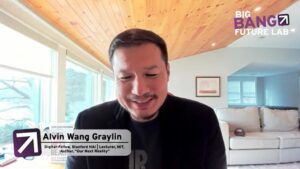
For years, the growth of AI was built on scaling up its GPUs, but innovation expert Alvin Wang Graylin, author of Our Next Reality: Preparing for the AI-powered Metaverse, sees now a move to more collaboration. Chip maker Nvidia is not the only winner anymore, as competition is growing and AI models can develop through more experience and need less capacity to grow, as China’s Deepseek proved earlier this year, he says at the Big Bang Future Lab.
China’s financial system is much tightly controlled by the government compared to what the world is used to, says financial expert Victor Shihat the BBC. China has been spending trillions of US dollars in loans to both the developing and the developed countries, including to the insurer of the CIA’s pension fund, writes the BBC.
The BBC:
“China has a kind of financial system that the world has never seen,” says Victor Shih, director of the 21st Century China Centre at University of California San Diego. China has the largest banking system in the world – larger than the US, Europe and Japan put together, he adds.
That size, along with the amount of control Beijing exerts over state banks, gives it unique capabilities.
“The government controls interest rates and directs where the credit goes,” Mr Shih says. “This is only possible with very strict capital control, which no other country could have on a sustainable basis.”
Some of the investments in wealthy economies appear to have been made in order to generate a healthy return. Others fall in line with Beijing’s strategic objectives, set out a decade ago in a major government initiative called Made in China 2025.
In it the Chinese authorities outlined a clear plan to dominate 10 cutting-edge industries, like robotics, electric vehicles and semiconductors by this year.
Beijing wanted to fund big investments abroad so key technologies could be brought back to China.
Global alarm at the plan led China to drop public mention of it, but Victor Shih says it “stayed very much alive” as a guiding strategy.
“There are all kinds of plans still being published,” he says, “including an artificial intelligence plan and a smart manufacturing plan. However, the mother of all plans is the 15th five-year plan.”





 , does not see a change in policies for China’s economy in 2026 toward supporting the sluggish domestic consumption, he says at a debate at the Asia Society.